 TechBlonhub A new digital technology era.
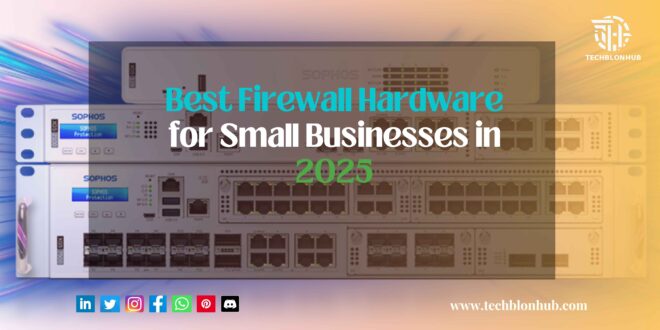

Best Firewall Hardware for Small Businesses in 2025
Choosing the best firewall for small business networks is no longer optional. Small businesses are increasingly targeted by ransomware, phishing attacks, malware, and network intrusions because attackers often assume smaller organizations have weaker defenses.
Whether you operate a small office, retail location, remote workforce, or multi-site business, selecting the right firewall for small business environments can significantly reduce risk and improve overall network security.
The challenge is that there is no universal solution. Different businesses require different levels of performance, security, scalability, and management.
This guide covers the best firewall for small business deployments in 2025 and explains how to choose the right hardware based on your needs.
Why Every Small Business Needs a Firewall
Many businesses assume their router provides sufficient protection.
While routers provide basic NAT functionality, they do not offer the deep inspection and intelligent protection modern businesses require.
A dedicated small business firewall provides:
- Network traffic inspection
- Malware detection
- Application filtering
- VPN support
- Threat intelligence
- Ransomware protection
- Remote access security
Without proper protection, even a single compromised device can expose your entire network.
Read more: Small Business Firewall Buying Guide
Next Generation Firewall vs Traditional Firewall
Understanding next generation firewall vs traditional firewall is essential before making a purchase.
Traditional firewalls primarily:
- Filter traffic based on ports and IP addresses
- Provide basic packet filtering
- Block unauthorized connections
Next-generation firewalls add:
- Application awareness
- Deep packet inspection
- Intrusion prevention systems
- Malware scanning
- Behavioral analysis
- Threat intelligence integration
Most businesses should focus on next-generation solutions because modern threats rarely rely on simple attacks.
What Makes the Best Firewall for Small Business?
Before buying firewall hardware, evaluate:
Performance Requirements
Consider:
- Number of users
- Internet speed
- VPN traffic
- Cloud applications
Security Features
Look for:
- Deep packet inspection
- Intrusion prevention
- Malware filtering
- SSL inspection
Scalability
Your firewall should grow with your business.
Ease of Management
Complex security systems that nobody understands create operational risks.
1. Sophos Firewall
Sophos remains one of the strongest firewall for small business solutions because it combines strong security with relatively simple management.
Advantages include:
- AI-powered threat detection
- Virtual firewall support
- Centralized management
- Behavioral analysis
Sophos adapts particularly well to changing network environments.
Many businesses performing a best small business firewall review consistently place Sophos among the top options.
2. Bitdefender BOX
Bitdefender BOX focuses on simplicity and endpoint protection.
Benefits include:
- Malware protection
- Content filtering
- Anti-phishing capabilities
- Device monitoring
This solution works particularly well for smaller offices with limited IT staff.
3. SonicWall TZ Series
SonicWall remains one of the most recognized names in small business firewall deployments.
Key advantages:
Deep Packet Inspection
Traffic inspection occurs without significant performance loss.
Real-Time Deep Memory Inspection
SonicWall identifies:
- Fileless malware
- Zero-day attacks
- Memory exploits
Wireless Integration
Certain models include wireless functionality for simplified deployment.
Businesses requiring stronger protection often deploy:
- TZ370
- TZ470
- TZ570
These systems provide strong performance for growing businesses.
4. Cisco Meraki MX68
Cisco Meraki combines firewall capabilities with cloud management.
Features include:
- Centralized dashboard management
- VPN support
- Content filtering
- SD-WAN functionality
Businesses with multiple locations often prefer Meraki because of simplified administration.
5. Ubiquiti UniFi Security Gateway
UniFi remains popular because it integrates easily with existing UniFi ecosystems.
Advantages:
- Affordable pricing
- Unified management
- Multiple customization options
- Easy deployment
This firewall for small business environments works particularly well for businesses already using UniFi switches and access points.
6. WatchGuard Network Security
WatchGuard focuses heavily on ease of deployment.
Benefits include:
- Strong threat intelligence
- User-friendly interface
- Flexible sizing options
- Affordable entry pricing
Small organizations with limited security expertise often benefit from simplified management.
7. Protectli Vault (4-Port)
Protectli Vault appeals to businesses seeking customizable security deployments.
Advantages include:
- VPN support
- Compact design
- Multiple network interfaces
- Open-source compatibility
This solution works well for technically experienced teams.
8. Avast Endpoint Protection
Avast provides endpoint security combined with network protection.
Features include:
- Ransomware protection
- Malware prevention
- Cross-platform support
- Threat monitoring
Businesses seeking integrated endpoint security may find Avast attractive.
Which Small Business Firewall Should You Choose?
Small Offices (Under 20 Users)
Best options:
- Sophos
- SonicWall TZ
- Ubiquiti
Multi-Site Businesses
Best options:
- Cisco Meraki
- Sophos
Budget-Conscious Businesses
Best options:
- Ubiquiti
- Protectli
Security-Focused Businesses
Best options:
- Sophos
- SonicWall
- WatchGuard
Common Mistakes Businesses Make When Buying Firewalls
Avoid these mistakes:
- Buying Based Only on Price: Cheap solutions often create expensive security problems.
- Ignoring Future Growth: Choose systems that support expansion.
- Underestimating VPN Usage: Remote work increases bandwidth demands.
- Assuming Routers Replace Firewalls: Routers alone rarely provide adequate protection.
- Why Hardware Matters Alongside Security Policies: Even the best firewall for small business networks cannot compensate for poor security practices.
Businesses should combine firewall deployments with:
- User education
- Strong passwords
- Multi-factor authentication
- Network segmentation
- Software updates
Security works best when multiple layers exist.
Final Thoughts
The best firewall for small business environments depends heavily on workload, user count, risk tolerance, and growth plans.
For some businesses, a simple firewall appliance is enough. Others require advanced inspection, cloud management, and AI-powered threat detection. The goal is not simply buying hardware. The goal is building security infrastructure that protects business continuity.
FAQs
1. What is the best firewall for small business use?
The best firewall for small business environments depends on business size and requirements. Sophos, SonicWall, Cisco Meraki, and WatchGuard are among the strongest options because they combine security features with scalability and simplified management.
2. Do small businesses really need a dedicated firewall?
Yes. A dedicated small business firewall provides significantly more protection than basic routers by inspecting traffic, filtering malicious activity, and protecting networks from modern cyber threats.
3. What is the difference between next generation firewall vs traditional firewall?
Traditional firewalls mainly filter traffic using IP addresses and ports. Next-generation firewalls provide deeper inspection, application awareness, malware detection, and behavioral analysis to protect against modern threats.
4. Which firewall for small business works best for remote employees?
Businesses with remote workers often benefit from solutions like Cisco Meraki, Sophos, or SonicWall because they provide strong VPN capabilities and centralized management.
5. How often should businesses upgrade firewall hardware?
Most firewall hardware should be evaluated every 3–5 years depending on traffic growth, new security requirements, software support, and changes in business operations.

Author: AJ
As a passionate blogger, I'm thrilled to share my expertise, insights, and enthusiasm with you. I believe that technical knowledge should be shared, not hoarded. That's why I take the time to craft detailed, well-researched content that's easy to follow, even for non-tech. I love hearing from you, answering your questions, and learning from your experiences. Your feedback helps me create content that's tailored to your needs and interests


