 TechBlonhub A new digital technology era.
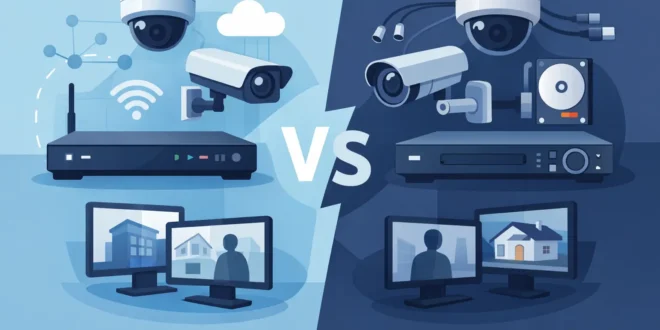

If you’re replacing an aging camera setup or buying surveillance equipment for the first time, the nvr vs dvr systems question decides more than just recording. It affects image quality, installation complexity, upgrade options, network load, and how much time you’ll spend troubleshooting later.
A lot of buyers assume the choice is simple: DVR is older, NVR is newer, so NVR must be better. That is sometimes true, but not always. The right answer depends on the building, the cabling you already have, the cameras you plan to use, and whether you care more about upfront cost or long-term flexibility.
NVR vs DVR systems: the core difference
The simplest distinction is this: DVR systems work with analog cameras, while NVR systems work with IP cameras. That single difference changes almost everything else.
A DVR, or digital video recorder, processes video data at the recorder itself. The analog camera sends raw footage over coaxial cable, and the DVR handles encoding, storage, and playback. This is why DVR setups are often tied to older CCTV infrastructure and are still common in buildings that already have coax runs in place.
An NVR, or network video recorder, works with digital IP cameras that process video at the camera and send it across a network. These cameras usually connect through Ethernet, often using PoE, which can carry both power and data over one cable. That makes NVR systems cleaner to install and easier to scale in many modern environments.
So when comparing nvr vs dvr systems, you are really comparing two different surveillance architectures, not just two recorder boxes.
Where DVR still makes sense
DVR is not dead, and writing it off too quickly can lead to the wrong purchase. If you already have a functioning coaxial wiring layout in a store, warehouse, office, or multi-room property, a DVR can save serious money. Reusing existing cabling reduces labor and avoids tearing into walls or ceilings.
DVR systems also tend to have lower entry costs. For smaller budgets, that matters. A basic analog setup can still deliver acceptable security coverage for entrances, hallways, parking areas, and stock rooms, especially if your goal is event review rather than high-detail analytics.
That said, there are trade-offs. Analog cameras usually lag behind IP cameras in image clarity, smart detection features, and remote management flexibility. You can find HD-over-coax options that improve quality, but the platform still has limits compared to a strong IP deployment.
Why NVR is the default choice for many modern installs
NVR systems fit the way most current networks and security plans are built. IP cameras offer higher resolutions, better low-light performance, and more intelligent features such as motion zones, person detection, vehicle detection, and line crossing alerts. Not every deployment needs those tools, but when you do need them, analog starts to feel restrictive fast.
PoE is one of the biggest practical advantages. With a PoE switch or built-in PoE ports on the recorder, each camera may need only one Ethernet cable. That simplifies installation and often speeds up expansion later. For IT teams and technically comfortable buyers, this is a major reason NVR keeps winning new deployments.
NVR systems are also easier to integrate into broader networked environments. If your business already manages switches, VLANs, firewalls, or remote access policies, IP cameras fit more naturally into that ecosystem. You gain more control, but you also take on more responsibility for network design and security.
Video quality and smart features
This is where the gap is often most obvious. NVR systems usually support higher-resolution cameras, from 4MP and 8MP up to 4K and beyond in premium setups. That extra detail can matter a lot when you need to identify faces, read plates, or review incidents that happen at the edge of the frame.
DVR systems can still produce useful footage, especially with modern HD analog standards, but they are generally less future-ready. If your main priority is broad visibility rather than fine detail, that may be enough. If identification quality matters, NVR usually has the edge.
Smart features also tilt toward NVR. Many IP cameras include onboard processing for alerts and analytics, which reduces false alarms and makes footage easier to search. For a business owner who wants fewer useless notifications or an admin who needs faster incident review, that advantage is practical, not just technical.
Installation and cabling trade-offs
This is the section buyers often underestimate. NVR is usually easier in new installations, but not automatically easier everywhere.
If you’re wiring a new office, retail unit, or home, Ethernet and PoE are hard to beat. One cable per camera, easy switch-based expansion, and stronger compatibility with modern infrastructure make NVR attractive. If you’re comfortable working with IP devices, setup can be straightforward.
But if the site already has coax throughout the building, switching to NVR may involve new cable runs, network planning, switch placement, and bandwidth considerations. In an older property, that added labor can wipe out the cost advantage of newer hardware.
DVR installation is more rigid, but sometimes that rigidity is useful. Analog systems are often simpler for small deployments where the goal is just to get cameras recording reliably without integrating them into the wider network.
Cost now versus cost later
DVR often wins on upfront price. The recorder and cameras usually cost less, and reusing coax can reduce installation expense. For tight budgets, that is a valid reason to choose DVR.
NVR usually costs more at the start, especially if you add high-resolution cameras, PoE switches, or managed networking gear. But long term, it can offer better value. Upgrades tend to be easier, camera options are broader, and the system is more aligned with current surveillance technology.
This is where buyers need to be honest about lifecycle. If you want a low-cost setup that covers the basics for the next few years, DVR may be enough. If you want to expand, improve analytics, or standardize on IP-based infrastructure, paying more for NVR now can save a replacement later.
Storage, bandwidth, and performance
Higher-quality video creates higher storage demand, and NVR systems often produce much larger files because IP cameras typically record at higher resolutions and frame rates. That means storage planning matters more than many buyers expect.
DVR systems can be lighter on storage if camera quality is lower, but that advantage comes with reduced detail. NVR setups may also place more demand on the network, especially in multi-camera deployments with remote viewing enabled. Poor switch capacity, weak uplinks, or unmanaged traffic can create performance issues.
This does not make NVR a bad choice. It just means the recorder is not the whole system. Storage drives, network hardware, camera bitrates, and retention targets all need to be considered together.
Security and remote access
NVR systems offer stronger modern capabilities, but they also introduce more cybersecurity concerns because they are network-connected by design. Every IP camera is effectively an endpoint. That means firmware updates, credential management, segmentation, and remote access settings matter.
DVR systems are not immune to risk, especially if exposed to the internet, but purely analog camera connections limit some attack surfaces. For buyers who want remote monitoring, app access, and centralized management, NVR is usually more capable. Just make sure convenience does not come at the cost of weak passwords and open ports.
For SMBs and IT-led environments, this is often the tipping point. A well-managed NVR deployment can be far more useful than DVR. A poorly secured one can become another device problem on the network.
Which one should you choose?
Choose DVR if you already have coax in place, your budget is tight, and your surveillance needs are basic. It remains a practical option for smaller sites, legacy upgrades, and buyers who value simplicity over advanced features.
Choose NVR if you want higher image quality, easier scaling, smarter alerts, and a system that fits modern networks. It is usually the better long-term investment for new installs, growing businesses, and users who expect more than just passive recording.
If you’re on the fence, ask three questions. Are you reusing existing cabling? Do you need high-detail footage or analytics? And will this system need to grow over the next few years? Those answers will usually point in the right direction faster than spec-sheet shopping.
The best surveillance system is not the newest one or the cheapest one. It’s the one that matches your building, your risk level, and the way you’ll actually use the footage when something goes wrong.