 TechBlonhub A new digital technology era.
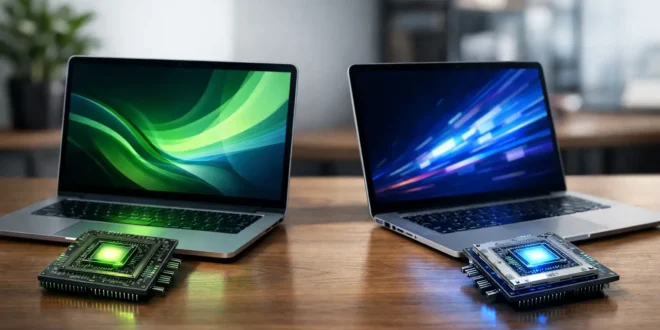

A laptop that lasts through a full workday without hunting for an outlet is compelling. So is a machine that runs every legacy app, peripheral, game, and management tool without a second thought. That is the real decision behind ARM vs x86 laptops. It is no longer a niche processor debate – it can determine whether a new PC feels brilliantly efficient or unexpectedly limiting.
For most buyers, x86 remains the safe default. ARM laptops, however, now deserve serious attention, especially for mobile professionals, students, and organizations standardizing on cloud-based work. The right choice depends less on benchmark headlines and more on the software and hardware your day actually requires.
ARM vs x86 laptops: the practical difference
ARM and x86 are processor instruction set architectures. Put simply, they are different ways a computer chip receives and processes instructions. That difference affects operating systems, applications, drivers, power use, and compatibility.
x86 is the established PC architecture. Intel Core and AMD Ryzen processors use x86, and the vast majority of Windows software, enterprise utilities, PC games, and accessory drivers were built with it in mind. If you purchase a conventional Windows laptop from Dell, HP, Lenovo, ASUS, or Acer, it will usually be x86.
ARM processors prioritize efficiency. Apple Silicon Macs use ARM, as do Windows PCs powered by Qualcomm Snapdragon processors. ARM designs can deliver strong performance while consuming less power, which helps manufacturers build thinner devices with cooler operation and long battery life.
Neither architecture is automatically faster. A modern ARM chip can outperform older x86 chips in many daily tasks, while a high-performance x86 laptop with dedicated graphics can dominate demanding engineering, gaming, and production workloads. The better architecture is the one that supports your work without friction.
Battery life and mobility: ARM’s strongest case
ARM laptops have changed expectations for Windows battery life. Devices based on current Snapdragon processors can often run through a typical office day, including web browsing, video calls, documents, and streaming, without needing a charger. Apple MacBooks with M-series processors have delivered similar results for several years.
This advantage is not only about a bigger battery. ARM chips are designed to do more work per watt, so they can use less energy during light and moderate workloads. They also tend to run cooler and quieter. For people who work from airports, classrooms, client sites, or conference rooms, those gains are immediately useful.
x86 laptops have improved significantly, particularly models built around efficient Intel Core Ultra and AMD Ryzen mobile chips. A well-configured x86 ultrabook can still provide excellent endurance. But when battery runtime, instant wake, quiet operation, and portability sit at the top of the buying criteria, ARM has a meaningful edge.
There is a trade-off. Battery claims vary widely by screen brightness, cellular connectivity, display type, background apps, and whether software runs natively or through emulation. Do not buy based solely on a manufacturer’s maximum-hour figure. Look for testing that reflects the applications you use.
Software compatibility still favors x86
Compatibility is the question that should stop an organization from treating ARM as an automatic upgrade. Windows on ARM has improved rapidly, and many mainstream applications now run natively or perform well through emulation. Microsoft 365, web browsers, video conferencing apps, common collaboration tools, and a growing set of creative and developer applications are generally workable on current ARM Windows systems.
But “generally workable” is not the same as guaranteed. Older desktop software, custom internal applications, niche accounting packages, specialized VPN clients, security agents, hardware configuration tools, and apps with low-level drivers can create problems. An application may open under emulation yet run slower, fail to access a feature, or break after an update.
This is especially relevant for IT teams. Before deploying ARM Windows laptops, test your endpoint management platform, EDR or antivirus agent, VPN, identity tools, remote support software, printers, smart card readers, USB devices, and line-of-business applications. A single unsupported driver can erase the productivity benefit of a lighter laptop.
For Apple buyers, the situation is different but still worth checking. Apple Silicon is ARM-based, and most major Mac applications now have native versions. Rosetta can run many older Intel Mac applications effectively, but organizations using older plugins, virtual machines, or niche Mac software should still validate their workflow.
Performance: match the chip to the workload
For browser-based work, Microsoft 365, email, cloud dashboards, coding in modern editors, video meetings, and media playback, current ARM laptops feel fast. Their responsiveness can be excellent because the systems wake quickly, remain cool, and avoid aggressive fan noise under routine work.
ARM can also be a strong choice for developers who build web applications, work with cloud services, or use tools available natively for ARM. Developers working in macOS already know this model well. Windows on ARM is becoming more viable, but toolchains, containers, local virtual machines, and device-specific SDKs need verification before making it a primary development machine.
x86 is the safer option for heavy local workloads. That includes advanced CAD, many engineering applications, professional audio tools with older plugins, large local databases, specialized scientific software, and complex virtualization. It is also the better path for gamers. Most PC games target x86 Windows, and high-end gaming laptops pair x86 processors with NVIDIA or AMD dedicated GPUs that ARM systems cannot currently match for broad game compatibility and graphics performance.
A useful rule is simple: if your workload depends on a discrete GPU, multiple virtual machines, uncommon drivers, or legacy Windows applications, choose x86 unless you have personally tested the ARM alternative.
Security and management considerations
ARM laptops are not inherently immune to malware, and x86 laptops are not inherently insecure. Both can support modern security features such as hardware-backed keys, secure boot, biometric sign-in, disk encryption, and endpoint protection. Security comes from the complete device design, operating system configuration, update practices, identity controls, and user behavior.
That said, newer ARM laptops often arrive with modern platform security features enabled by default. Windows systems marketed as Copilot+ PCs, for example, commonly include advanced neural processing hardware and meet newer baseline requirements for memory and security capabilities. Those attributes can make them attractive for organizations refreshing older fleets.
IT administrators should focus on operational support rather than architecture alone. Confirm that your management tools can inventory the device, deploy policies, enforce encryption, collect security telemetry, and support remote troubleshooting. A laptop that is secure on paper but difficult to manage is a poor business standard.
Price, ports, and upgrade expectations
Price comparisons can be misleading. ARM laptops are frequently positioned as premium ultralights, where high-resolution displays, thin chassis designs, long battery life, and cellular options raise the final price. x86 laptops span every category, from low-cost student machines to mobile workstations, so there are simply more options at every budget.
Check the full configuration before deciding. Memory and storage are often soldered in thin ARM and x86 systems alike, making future upgrades impossible. Port selection also matters. A compact laptop with only USB-C ports may be fine for a cloud-first worker but inconvenient for someone connecting Ethernet adapters, external drives, security keys, displays, and serial accessories.
For business buyers, calculate the cost of adapters, docks, software licenses, support time, and replacement cycles. The cheapest laptop is not the lowest-cost device if it creates help desk tickets or forces employees to carry workarounds.
Who should buy an ARM laptop?
An ARM laptop makes sense for people whose work lives mostly in a browser and mainstream productivity software. It is particularly appealing for frequent travelers, executives, students, sales teams, writers, and remote workers who value battery life, silent operation, and an always-ready machine. It can also be a smart fit for cloud-first businesses that have already moved core tools to web applications and SaaS platforms.
Choose x86 if your work depends on broad compatibility. It remains the best recommendation for many IT admins, gamers, engineers, power users, and anyone replacing a laptop without time for troubleshooting. It is also the more conservative choice for businesses with custom software, specialized peripherals, or mixed legacy environments.
The architecture should not be a loyalty test. Start with the applications, drivers, accessories, and performance demands you cannot compromise on. If ARM supports all of them, its battery and mobility benefits are hard to ignore. If one critical tool does not, an x86 laptop will save you far more time than any extra hour of battery life.