 TechBlonhub A new digital technology era.
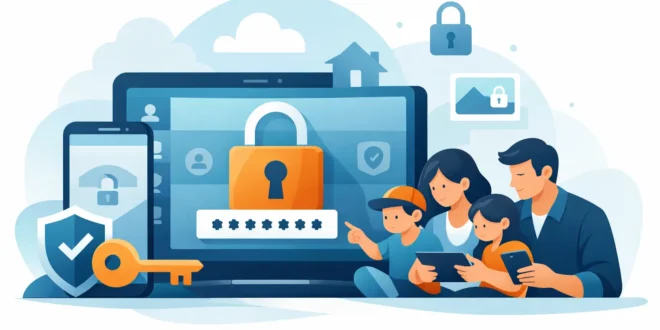

One reused Netflix password, one shared Amazon login in a text thread, one parent storing bank credentials in Notes – that is usually how a family security mess starts. A password manager for families fixes the real problem: too many accounts, too many people, and no safe system for sharing access when someone actually needs it.
For most households, this is not about reaching enterprise-grade security. It is about reducing the odds of lockouts, phishing mistakes, weak passwords, and that frantic moment when nobody knows who changed the Wi-Fi admin password. The right family plan should make everyday access easier while quietly improving security in the background.
What a password manager for families should actually do
A family password manager is not just a bigger personal vault. The useful ones are designed for shared access with boundaries. That means each person gets a private vault for personal logins, plus shared vaults or folders for household accounts like streaming services, utilities, insurance portals, school apps, smart home devices, and travel bookings.
The difference matters. If every login sits in one giant communal vault, you create a privacy problem and a management problem. Teenagers do not need access to a parent’s payroll portal, and parents probably do not need access to every gaming account unless recovery becomes necessary. Good family plans separate personal use from shared use without making setup feel like an IT project.
The best options also support password generation, autofill, secure notes, breach alerts, and multi-factor authentication. Those are no longer premium extras. They are baseline features if the goal is to keep a household safer than sticky notes and recycled passwords.
The core features that matter most
If you are comparing products, ignore flashy branding for a minute and focus on the mechanics. A strong password manager for families should make account sharing controlled, not casual.
Shared vaults with permission controls
This is the feature that turns a personal password manager into a family-ready one. You want the ability to create shared collections such as Home Bills, Streaming, Kids School Accounts, Travel, and Smart Home. Even better is granular access, where one person can view a login but not edit it, or an organizer can recover accounts when someone gets locked out.
Some services handle this better than others. A few make sharing elegant and intuitive. Others technically support it, but bury permissions behind clunky menus. If your family is not especially technical, usability matters just as much as encryption.
Account recovery that does not become a security hole
Families get locked out. Phones are replaced, master passwords are forgotten, and kids uninstall apps they were told not to touch. Recovery options need to be realistic.
That said, recovery is always a trade-off. The more convenient the recovery process, the more carefully you need to understand the security model. Some providers offer family organizers who can help restore access. Others use recovery keys or emergency kits. Neither approach is automatically better. It depends on whether your priority is strict zero-knowledge security or easier household administration.
Cross-platform support
A family plan only works if everyone can use it on the devices they already own. That usually means iPhone, Android, Windows, Mac, and browser extensions for Chrome, Safari, Edge, or Firefox. If one person in the house uses a less common setup and the password manager works poorly there, adoption drops fast.
In practical terms, browser autofill quality often matters more than the mobile app marketing screenshots. If the extension is unreliable, people go back to memorized passwords and insecure workarounds.
Alerts for weak, reused, or exposed passwords
This is one of the clearest value-adds. A good family dashboard should help identify which accounts need attention. Reused passwords are still common in households, especially for shopping, entertainment, and school-related accounts.
A breach monitor does not prevent leaks by itself, but it helps you react faster. For families managing dozens or even hundreds of logins across multiple people, that visibility is useful.
Which type of family needs which kind of tool?
Not every household needs the same setup. The best password manager for families depends on how your accounts are shared and who is managing them.
A household with younger kids usually benefits from simplicity first. Parents need easy sharing, recovery, and the ability to store school logins, device PIN backups, and medical or travel information. In that case, a product with a clean interface and straightforward admin controls often beats one with every advanced setting imaginable.
A household with teens and college-age users may need stronger boundaries. Separate vaults, item-level sharing, and good account recovery become more important because those users are more independent and have many more accounts.
A mixed home office household is closer to a small business than many people realize. If personal and work credentials overlap on the same devices, you may want a manager that cleanly separates personal vaults from shared family items. That prevents accidental sharing and reduces the chance that a household workflow becomes a security risk for remote work.
Common mistakes families make when choosing one
The biggest mistake is choosing based on price alone. Family plans are usually inexpensive compared to the cost of an account takeover, but cheap still wins attention. The problem is that a low-cost service with weak sharing tools or poor autofill quickly gets ignored. Once that happens, people fall back to unsafe habits.
Another mistake is overbuying. Some password managers are excellent but tuned more for teams than families. They include admin controls, provisioning features, or policy management that sound impressive but add friction. If your household just needs secure sharing and better password hygiene, extra complexity can work against you.
A third mistake is skipping setup discipline. Buying the subscription is the easy part. The real value appears only after you import logins, create shared vaults, enable multi-factor authentication, and teach everyone the basic workflow. Without that, you are paying for software while the old habits remain untouched.
How to evaluate the best password manager for families
If you are narrowing down options, test them like you would evaluate a router or firewall for real-world use. Specs matter, but behavior matters more.
Start with the onboarding experience. Can a nontechnical family member install it, sign in, and understand what is private versus shared? If the answer is no, expect support calls at home.
Then test shared access. Create a vault for one household category and add two or three users. Change one password and see how quickly the update syncs across devices. Check whether permissions are obvious or confusing.
After that, check autofill reliability on the sites your family actually uses. Banking sites, school portals, healthcare systems, and retail logins often behave differently. A manager that works well on simple sites but struggles on real ones becomes frustrating fast.
Finally, review security basics. Look for strong encryption, support for passkeys where available, biometric unlock on mobile devices, and clear documentation on how the provider handles account recovery and vault data. Marketing claims are easy. Transparent security design is harder to fake.
Is a free option enough?
Usually not for a household. Free tiers can be fine for one person testing the basics, but family use changes the equation. Shared vaults, admin controls, recovery workflows, and multiple user seats are typically locked behind paid plans for a reason.
There is also the support factor. When several people depend on the same system, stability and product maturity matter more than saving a few dollars per month. A free tool that lacks polished sharing or dependable sync can create enough friction that the whole plan collapses.
That does not mean the most expensive option is best. It means the value should come from practical family features, not just a brand name or a long feature table.
Setup advice that prevents future headaches
Once you choose a password manager for families, structure it before you start dumping in logins. Create a few shared vaults based on real use cases, not abstract categories. Home, Bills, Travel, Streaming, and Emergency Access usually cover more ground than overly detailed folders.
Keep personal accounts private by default. Share only what genuinely needs to be shared. That reduces clutter and limits mistakes.
Turn on multi-factor authentication for every adult account tied to the manager itself. If the password manager is the front door to your digital life, that account deserves the strongest protection in the house.
It also helps to agree on one household rule: no more passwords in text messages, email drafts, or phone notes. A family plan works best when it becomes the default place for credentials, not just another option.
The best family password manager is the one your household will actually use every week, not the one with the longest security whitepaper. If it makes sharing safer, recovery easier, and weak passwords less common, it is already doing the job that matters most.