 TechBlonhub A new digital technology era.
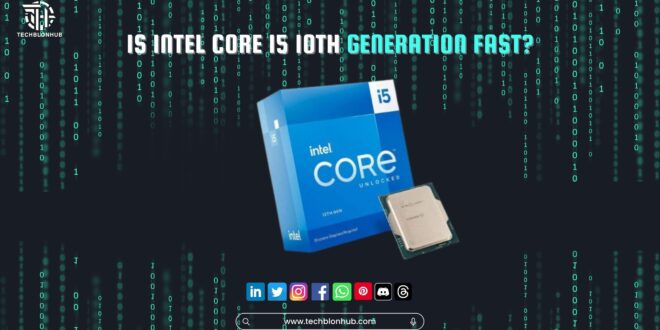

Intel i5 vs i7: Which Processor Is Better for Your Needs?
When comparing intel i5 vs i7, most users are really trying to answer one question: which processor is fast enough for everyday work, and which one is better for heavier tasks like design, editing, or running multiple business applications at once?
Both Intel Core i5 and Intel Core i7 processors belong to Intel’s mainstream performance lineup, widely used in desktops and laptops across small business computer setups and professional environments.
Understanding Intel Core i5 Performance
The Intel Core i5 10th generation processor is often considered the “sweet spot” for general performance. It delivers strong speed for everyday tasks like spreadsheets, browsing, emails, and business software.
For most computers for small businesses, the i5 is more than enough. It handles multitasking well without pushing costs too high, making it a practical choice for startups and offices.
It is also widely used in entry to mid-level Intel Core i5 systems because it balances performance and affordability.
Understanding Intel Core i7 Performance
The core i7 processor is built for users who need more power. Compared to i5, it usually offers:
- Higher clock speeds
- More cores or threads
- Better performance under heavy multitasking
This makes Intel Core i7 ideal for video editing, large data processing, software development, and advanced business workloads.
In most computers for small businesses, i7 processors are used in executive systems or specialized workstations where performance is critical.
intel i5 vs i7: Key Differences
When evaluating intel i5 vs i7, the difference is not just speed—it’s efficiency under pressure.
Intel Core i5:
- Best for general office use
- Budget-friendly
- Efficient for multitasking
Intel Core i7:
- Better for heavy workloads
- Stronger multitasking capability
- Higher performance ceiling
For most small business computer setups, the i5 is sufficient unless you are running demanding applications regularly.
Which One Should a Small Business Choose?
For most businesses, choosing between i5 and i7 depends on workload:
- Basic office tasks → Intel Core i5
- Heavy multitasking or creative work → Core i7 processor
- Mixed workloads → Depends on long-term scalability
Intel in Modern Business Computing
Intel processors remain dominant in business environments because they are reliable, widely supported, and compatible with enterprise software.
Whether you are choosing Intel Core i5 10th generation systems or upgrading to higher-end Intel Core i7 machines, both options integrate smoothly into modern office setups.
For companies scaling their infrastructure, it’s important to match processor power with actual workload requirements rather than overspending on unnecessary performance.
Final Thoughts
The intel i5 vs i7 comparison ultimately comes down to usage. The Intel Core i5 is ideal for everyday business operations and cost efficiency, while the core i7 processor is designed for demanding workloads and long-term scalability.
For most computers for small businesses, i5 remains the most balanced choice, while i7 is best reserved for performance-heavy roles.
Choosing the right Intel processor ensures your business runs smoothly without unnecessary cost or performance limitations.
FAQs
1. Is Intel Core i5 good for small business use?
Yes, Intel Core i5 is widely used in small business computer setups because it handles everyday tasks like emails, documents, and multitasking efficiently without high cost.
2. Is Core i7 always faster than Core i5?
In most cases, yes. The core i7 processor offers better multitasking and higher performance, especially for demanding applications and heavier workloads.
3. Can Intel i5 handle business software?
Yes, the Intel Core i5 10th generation can comfortably run most business software used in offices and small business environments.
4. Which is better for office work, i5 or i7?
For general office work, i5 is usually enough. i7 is better suited for advanced tasks like design, analytics, or heavy multitasking.
5. Do small businesses need i7 processors?
Not always. Many computers for small businesses run efficiently on i5 processors. i7 is only necessary if the workload is intensive or performance-heavy.

Author: AJ
As a passionate blogger, I'm thrilled to share my expertise, insights, and enthusiasm with you. I believe that technical knowledge should be shared, not hoarded. That's why I take the time to craft detailed, well-researched content that's easy to follow, even for non-tech. I love hearing from you, answering your questions, and learning from your experiences. Your feedback helps me create content that's tailored to your needs and interests