 TechBlonhub A new digital technology era.


A laptop refresh, a firewall upgrade, or a new Wi-Fi deployment used to be separate buying decisions. In 2026, they increasingly connect to the same question: can your infrastructure support AI-heavy workloads without creating a security, cost, or management problem? The new technology trends in 2026 are less about chasing flashy gadgets and more about making smarter choices around performance, protection, and control.
For IT teams and technically minded buyers, the biggest shift is practical. AI is moving from a browser tab into endpoints, network operations, security tools, and business workflows. Meanwhile, identity attacks are getting cheaper to launch, power constraints are shaping data-center plans, and faster wireless standards are exposing older switching and cabling bottlenecks.
New Technology Trends in 2026: What Is Actually Changing
AI agents move from assistants to operators
Generative AI assistants already write drafts, summarize meetings, and answer support questions. The bigger 2026 development is the rise of AI agents that can carry out multi-step tasks. An agent may review a help desk ticket, look up device history, propose a fix, open a change request, and update documentation. In software teams, it may test code, identify a likely regression, and prepare a pull request for human review.
That capability can reduce repetitive work, but it also changes the risk model. An AI tool that only produces text has limited access. An agent connected to email, file storage, customer records, cloud consoles, or network-management platforms has meaningful permissions. A bad prompt, flawed automation rule, or compromised account can turn an efficiency tool into a fast-moving operational issue.
The right approach is not to ban agents or give them broad access on day one. Start with narrow, low-risk jobs, require approval for consequential actions, and log every action the system takes. Treat an AI agent like a new junior administrator: useful, fast, and never ready for unrestricted production access without supervision.
AI-ready PCs become a real purchasing category
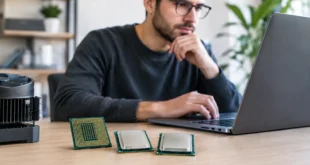
The term “AI PC” has been used loosely, but hardware distinctions will matter more in 2026. Newer laptops and desktops combine CPUs, GPUs, and neural processing units, or NPUs, to run selected AI tasks locally. This can improve battery life for supported features, speed up transcription or image work, and keep sensitive data on the device rather than sending every request to a cloud service.
Local processing is not automatically better. Large language models and demanding creative workloads still benefit from powerful cloud GPUs or workstation-class hardware. But for organizations handling confidential meetings, healthcare-adjacent records, engineering files, or regulated data, on-device AI can reduce exposure and recurring cloud costs.
When buying systems, do not select a laptop solely because its marketing mentions AI. Check the memory capacity, storage, webcam quality, battery performance, management support, and repair options first. Then verify whether the applications your team actually uses support the NPU. A capable 32GB business laptop with strong security features may be a better investment than a thin machine built around an impressive AI label.
Networks must carry more traffic and make smarter decisions
Wi-Fi 7, multi-gig Ethernet, and 5G are no longer only for high-end installations. They are becoming relevant wherever dense device use, high-resolution video, real-time collaboration, or large local data transfers are routine. A modern access point can offer far more wireless capacity than the 1GbE switch port feeding it, which means a wireless upgrade may require 2.5GbE switching, appropriate Power over Ethernet capacity, and a closer look at existing cabling.
This is where many upgrades fail. Organizations buy faster access points but overlook switch backplanes, uplink speeds, power budgets, and internet circuit limits. The result is a costly deployment that performs little better than the old one.
AI-assisted network operations will also become more common. These tools can detect unusual latency, classify application traffic, identify coverage gaps, and suggest likely causes of failure. They can save time, particularly for smaller IT teams, but their recommendations are not proof. Network engineers should still validate alerts against packet captures, device logs, physical topology, and user reports before making major changes.
Private 5G will remain a specialized but useful option for warehouses, industrial sites, campuses, and field operations where Wi-Fi coverage or mobility is difficult. It is not a universal Wi-Fi replacement. It usually requires more planning, spectrum considerations, compatible devices, and operational expertise. For many offices, well-designed Wi-Fi 7 remains the more economical answer.
Cybersecurity shifts toward identity and recovery
The most damaging attacks do not always begin with a dramatic zero-day exploit. They often begin with a stolen credential, a convincing phishing message, an abused remote access tool, or a user approving a fraudulent multifactor authentication request. In 2026, identity protection will continue to outrank many perimeter-only security strategies.
Passkeys are gaining traction because they reduce reliance on reusable passwords and resist many phishing attacks. Hardware security keys remain valuable for administrators and high-risk users. Conditional access policies, device posture checks, least-privilege roles, and privileged access management are becoming standard requirements rather than enterprise extras.
The trade-off is user friction and deployment complexity. A strong identity system can frustrate employees if enrollment, recovery, and device replacement are poorly planned. Build a recovery process before enforcing stricter controls. Test it with real users, including employees who travel, work remotely, or rely on shared devices.
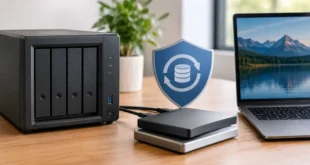
Ransomware defenses are also becoming more recovery-focused. Detection matters, but the decisive question after an attack is whether systems and data can be restored quickly and safely. Immutable backups, separate backup credentials, tested recovery runbooks, and segmented networks are more valuable than a backup dashboard that merely reports green status.
Post-quantum cryptography deserves attention as well, though it is not a reason to panic-buy products. Quantum computers are not broadly breaking modern encryption today. The immediate task is crypto agility: know where your organization uses encryption, certificates, VPNs, and long-lived sensitive data so you can migrate when standards and vendor support mature.
Data centers face an AI power and cooling problem
AI workloads are changing infrastructure economics. High-density GPU servers consume far more power and generate more heat than conventional business servers. Even companies that never build an AI cluster will feel the impact through higher cloud costs, longer hardware lead times, and increased demand for data-center capacity.
For small and mid-size organizations, this makes hybrid planning more important. Running every AI workload in the cloud may be convenient but expensive at scale. Running everything locally can demand capital, expertise, cooling, and security controls that are hard to justify. The sensible answer depends on workload patterns.
Use cloud capacity for variable demand, experimentation, and models that require large-scale compute. Consider local inference for predictable, latency-sensitive, or sensitive workloads where data should stay close to users. Before purchasing servers, measure model size, concurrent users, storage needs, network requirements, and the full cost of power and support. GPU specifications alone do not tell the whole story.
Connected devices need longer lifecycles and tighter controls
Cameras, sensors, door controllers, smart displays, printers, and building systems are now part of the network security conversation. Many remain deployed for years after their software support becomes uncertain. That creates a quiet but persistent exposure, especially when devices sit on the same network as workstations or servers.
The practical trend is stronger device inventory and segmentation. Every connected device should have an owner, a support date, a documented purpose, and a network zone appropriate to its risk. Cameras do not need access to accounting systems. Guest devices do not need visibility into internal printers. A managed switch and properly configured VLANs can solve problems that endpoint software alone cannot.
When evaluating connected hardware, ask how long firmware updates will be provided, whether default credentials can be removed, how logs are exported, and whether the device can operate without unnecessary cloud dependence. Cheap hardware can become expensive when it requires emergency replacement after support ends.
Where to Put Your 2026 Technology Budget First
The strongest technology plans will not chase every trend equally. Start with the constraints already affecting your users: slow wireless in high-density areas, weak account security, aging laptops, unsupported network gear, poor backup recovery, or cloud bills that keep climbing. Those are business problems with technology causes.
A useful rule is to fund foundations before experiments. Improve identity controls, asset visibility, backups, switching capacity, and network segmentation before handing critical workflows to autonomous AI tools. Then run targeted pilots with clear success measures, such as reduced ticket resolution time, lower latency, fewer account takeovers, or faster recovery testing.
2026 will reward teams that stay curious without becoming reactive. The next worthwhile upgrade is rarely the loudest product announcement. It is the one that removes a real bottleneck, reduces a credible risk, and leaves your organization easier to manage when the next change arrives.