 TechBlonhub A new digital technology era.
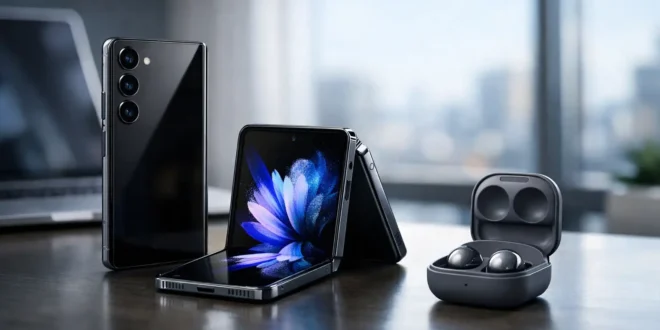

Samsung launches rarely stay quiet for long. Every new Galaxy release arrives with brighter displays, thinner frames, upgraded cameras, AI promises, and benchmark comparisons dominating headlines for days. But for buyers trying to make practical decisions, the loudest announcement is usually not the most important one.
The real value in following Samsung Galaxy news comes from understanding how Samsung’s decisions affect long-term usability, software support, business productivity, repairability, battery efficiency, and ecosystem integration. A flashy launch keynote might generate attention, but the details that shape ownership experience usually appear in the smaller changes: update policies, thermal management, AI deployment strategy, modem performance, and how Samsung positions devices across its wider ecosystem.
For TechBlonHub readers, that distinction matters. Whether you are a student looking for long-term value, a business standardizing employee devices, or a power user deciding whether an upgrade is worthwhile, Samsung Galaxy news becomes far more useful when filtered through practicality instead of hype.
Why Samsung Galaxy News Matters Beyond Launch Day
Samsung is no longer simply a smartphone company. The Galaxy ecosystem now includes premium phones, foldables, tablets, smartwatches, earbuds, laptops, and AI-powered software features designed to connect everything together.
That broader ecosystem means changes in one product category often influence the rest. A camera sensor upgrade in flagship Ultra devices may eventually improve Samsung’s midrange lineup. Battery optimizations introduced in premium devices can shape future Galaxy tablets and wearables. Even software support policies can influence resale value, long-term reliability, and enterprise purchasing decisions.
Samsung also occupies a unique position within the Android market. It maintains stronger carrier partnerships, deeper enterprise visibility, and more influence over mainstream Android expectations than most competitors. When Samsung pushes harder into Galaxy AI, productivity tools, anti-theft features, or ecosystem continuity, other Android brands often follow.
Businesses and consumers increasingly look toward commercial device ecosystems that balance productivity, security, and scalability across multiple device categories. Enterprise technology providers like GNTME are part of that wider conversation as businesses evaluate mobile hardware, connected devices, and workplace technology infrastructure capable of supporting modern workflows.
Software Support and Update Timing Matter More Than Ever
Software support has quietly become one of the most important parts of Samsung Galaxy news.
Samsung has significantly improved its Android and security update commitments over the past few years, and that shift affects long-term ownership far more than many buyers realize. Longer support windows improve device lifespan, increase resale value, reduce security risks, and make Galaxy devices more practical for both businesses and consumers.
For organizations managing employee devices, update reliability directly affects compliance, app compatibility, and operational security. For individual buyers, it changes the value equation entirely. A slightly older Galaxy device with strong update support can often be a smarter investment than a cheaper alternative with inconsistent software maintenance.
Still, promised support duration is only part of the story. Rollout speed and consistency remain equally important. Samsung has improved substantially in delivering updates faster across flagship and midrange devices, but prioritization differences between premium phones, foldables, tablets, and budget models still exist.
This is where practical Samsung Galaxy news becomes more valuable than launch-week excitement. Long-term support determines whether a device remains reliable after the marketing cycle ends.
Chipsets, Thermals, and Battery Efficiency Shape Real-World Experience
Launch coverage often focuses heavily on benchmark scores, but real ownership experience depends far more on sustained performance, heat management, and battery efficiency.
A more powerful processor means little if the device overheats under sustained workloads or drains battery aggressively during 5G usage. Samsung users running cloud dashboards, video calls, mobile editing tools, business applications, or hotspot connections benefit far more from balanced thermal performance than from isolated benchmark improvements.
Regional chipset differences also continue shaping Galaxy discussions. Samsung’s history of shipping different processors across markets has created years of debate among enthusiasts and power users. For most buyers, though, the practical questions are simpler:
- Does the device maintain stable performance?
- Is battery life reliable throughout the day?
- Does modem performance remain strong under heavy connectivity usage?
If those areas perform well consistently, minor benchmark differences become far less important in everyday use.
This is especially relevant as mobile devices increasingly function as productivity tools rather than purely communication devices. Businesses evaluating connected hardware ecosystems are prioritizing performance stability, security integration, and long-term reliability over headline specifications alone.
Galaxy AI Is Becoming Central to Samsung’s Strategy
Samsung wants Galaxy AI to define the next phase of its ecosystem, and some of that strategy genuinely makes sense.
Features like live translation, note summarization, transcription tools, image editing assistance, and AI-powered productivity enhancements can save meaningful time for users managing large amounts of information throughout the day. These tools are especially useful for professionals balancing communication, multitasking, and content management on mobile devices.
But Galaxy AI also deserves a more careful reading than launch presentations usually provide.
Some AI features rely heavily on cloud processing, which creates privacy considerations for businesses and users handling sensitive information. Others perform impressively during controlled demos but become less reliable in noisy real-world conditions. There is also the question of long-term availability. Several AI tools currently offered freely may eventually become tied to subscriptions or premium service models.
The most useful way to evaluate Samsung Galaxy AI news is to focus on practicality:
- Does the feature work reliably?
- Is processing happening locally or through the cloud?
- Does it improve everyday workflows meaningfully?
- Will the feature remain available long term?
Businesses increasingly exploring AI-enabled mobile productivity are also looking toward broader commercial technology ecosystems capable of supporting secure connectivity, mobile collaboration, and scalable device integration across teams.
Foldables Remain Samsung’s Most Important Long-Term Bet
Samsung’s foldable strategy continues revealing where the company believes premium mobile computing is heading.
The Z Fold line targets users who want the flexibility of a phone and small tablet combined into a single device. Meanwhile, the Z Fold line and Z Flip series represent Samsung’s broader attempt to redefine what premium smartphones can become beyond traditional slab designs.
The company has improved foldables steadily over recent generations. Durability, hinge design, multitasking software, display quality, and overall refinement are all noticeably stronger than earlier foldable devices.
Still, foldables continue involving trade-offs.
They remain more expensive than traditional smartphones. Long-term durability concerns still exist for many buyers. Repair costs can also be significantly higher, especially outside warranty coverage. For some users, the added flexibility genuinely improves productivity. For others, the novelty fades faster than expected.
Business users who spend large amounts of time reviewing documents, multitasking, attending meetings, and working in split-screen environments may find foldables particularly useful. The larger internal display can meaningfully improve mobile productivity for professionals working remotely or traveling frequently.
For most buyers, though, a traditional Galaxy S device still offers a more practical balance of durability, performance, simplicity, and cost.
Midrange Galaxy Phones Deserve More Attention
One of the most important Samsung Galaxy trends is not happening in the Ultra or Fold lineup. It is happening in Samsung’s midrange devices.
The Galaxy A series has improved steadily to the point where many midrange Galaxy devices now handle everyday workloads extremely well. Buyers increasingly receive strong displays, reliable cameras, good battery life, modern connectivity, and respectable performance without paying flagship prices.
That matters significantly as upgrade cycles continue stretching longer. Many consumers and businesses are becoming more selective about hardware spending, especially when modern smartphones already perform well for messaging, business apps, video calls, browsing, media consumption, and productivity tasks.
Samsung’s ability to combine respectable hardware with longer software support gives its midrange lineup a major advantage in value-focused markets.
The compromises still exist. Buyers typically give up:
- premium camera hardware
- advanced gaming performance
- higher-end materials
- faster storage
- certain display refinements
But for many users, those trade-offs are increasingly acceptable given the pricing difference between flagship and midrange devices.
Samsung Galaxy News Is Really Ecosystem News Now
Samsung’s ecosystem strategy is becoming just as important as its individual devices.
Galaxy phones now integrate more tightly with Galaxy Watches, Buds, tablets, and laptops. Features like synchronized messaging, file sharing, multi-device continuity, hotspot integration, and productivity handoff are becoming more polished across Samsung’s ecosystem.
This changes how many buyers evaluate devices. The best Galaxy product is not always the best standalone device. Sometimes it becomes the best option because it fits naturally into an existing setup.
A Galaxy tablet may make more sense if your phone already handles synchronization smoothly. A Galaxy Watch becomes more useful if device pairing, health tracking, and notification management work consistently across the ecosystem.
Samsung’s ecosystem approach also aligns with broader workplace trends where businesses increasingly prioritize connected device environments that simplify collaboration, mobility, and productivity management across teams.
For buyers following Samsung Galaxy news, this means evaluating announcements as part of a larger ecosystem strategy rather than treating each launch as an isolated product release.
What Buyers Should Ignore During Galaxy Launch Cycles
A large portion of Galaxy launch coverage focuses on changes that sound major but rarely affect long-term ownership experience significantly.
Small increases in display brightness, minimal thickness reductions, exaggerated camera comparisons, and isolated benchmark improvements often dominate early headlines despite having limited everyday impact.
More useful indicators usually appear later:
- battery degradation patterns
- thermal consistency
- modem reliability
- repair pricing
- accessory compatibility
- software update cadence
- durability reports
- AI feature practicality
This is where a utility-first approach to Samsung Galaxy news becomes valuable. It helps separate marketing momentum from the features that genuinely improve ownership experience over several years.
What to Expect Next From Samsung Galaxy News
The next phase of Samsung’s strategy will likely focus on three areas:
- stronger on-device AI
- deeper ecosystem continuity
- greater pressure to justify premium pricing
That final point matters most. Buyers are becoming more selective, especially as smartphone improvements become increasingly incremental year over year. Consumers and businesses both expect longer support cycles, better battery efficiency, more practical AI features, and clearer reasons to pay flagship prices.
Samsung’s advantage is not necessarily that it wins every hardware comparison. Its strength comes from combining mature software support, enterprise familiarity, retail visibility, ecosystem integration, and a broad connected-device portfolio.
That is why the best Samsung Galaxy news is rarely the loudest headline. It is usually the update that improves long-term usability, strengthens ecosystem value, or makes a device easier to recommend without major compromises.
FAQs
What is the latest Samsung Galaxy news in 2026?
The biggest Samsung Galaxy trends in 2026 include Galaxy AI expansion, improved foldables, stronger software support commitments, ecosystem integration, and continued focus on premium mobile productivity.
Are Samsung foldables worth buying?
Samsung foldables can be worthwhile for users who multitask heavily, travel frequently, or benefit from larger displays. However, they still involve higher costs and durability trade-offs compared to traditional smartphones.
How long does Samsung support Galaxy phones?
Samsung now offers several years of Android and security updates across many Galaxy devices, though exact support timelines vary by model and product category.
Is Galaxy AI useful in everyday use?
Some Galaxy AI tools provide meaningful productivity improvements, particularly for translation, transcription, note summarization, and photo editing. However, usefulness varies depending on workflow and real-world usage conditions.
Are Samsung midrange phones good enough now?
For many users, yes. Modern Galaxy A-series devices provide strong displays, reliable battery life, modern connectivity, and solid performance for everyday productivity and media use without flagship pricing.

Author: AJ
As a passionate blogger, I'm thrilled to share my expertise, insights, and enthusiasm with you. I believe that technical knowledge should be shared, not hoarded. That's why I take the time to craft detailed, well-researched content that's easy to follow, even for non-tech. I love hearing from you, answering your questions, and learning from your experiences. Your feedback helps me create content that's tailored to your needs and interests