 TechBlonhub A new digital technology era.
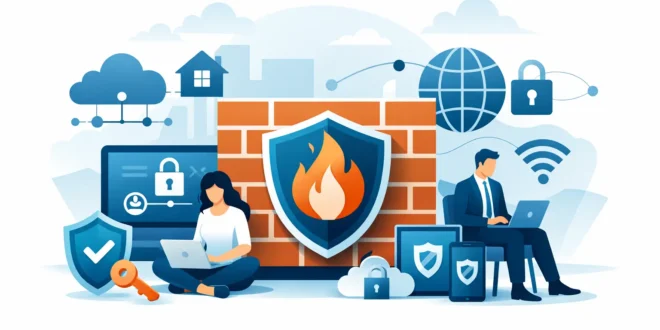

A remote employee signs in from hotel Wi-Fi, joins a cloud dashboard, opens a shared file, and answers email before breakfast. That convenience is exactly why choosing the best firewall for remote workers is no longer a niche IT task. The old model – protect the office perimeter and call it done – breaks fast when people work from home, coworking spaces, airports, and phones.
The tricky part is that “best” means different things depending on who owns the risk. A solo consultant may need something simple that protects a laptop and home network without constant tuning. A small business may need centralized policy control, VPN access, and visibility across dozens of users. An IT team may care less about flashy consumer features and more about logging, identity integration, and long-term manageability.
What makes the best firewall for remote workers?
A good remote-work firewall does more than block random traffic. It should protect users on untrusted networks, inspect traffic intelligently, support secure remote access, and stay manageable when nobody is sitting in the same building. That usually means looking beyond basic NAT firewall features bundled into every cheap home router.
Threat prevention matters, but so does usability. If security tools constantly break Zoom calls, throttle cloud apps, or require complicated manual setup, remote workers will find ways around them. The best choice is often the one that gives you enough control without turning every laptop into a help desk ticket.
There are a few features worth taking seriously. VPN support is still relevant for many teams, especially for secure access to internal systems. Intrusion prevention, DNS filtering, malware blocking, and application awareness add another layer when workers connect through unknown networks. Central management is a major plus if you support more than a handful of users. Zero-trust or SASE-style options can also make more sense than traditional appliance-based firewalls if your apps already live mostly in the cloud.
7 best firewall for remote workers options
1. Fortinet FortiGate
FortiGate is one of the strongest all-around choices for SMBs and distributed teams that want enterprise-grade security without jumping straight into very large enterprise complexity. It combines strong threat protection, VPN support, web filtering, and solid policy control in a platform many IT admins already know.
Its biggest advantage is balance. FortiGate works well when you need a branch firewall, home office protection for executives or key staff, and centralized management under one vendor. The trade-off is that licensing and feature tiers can get complicated, and smaller teams may not use everything they pay for.
2. Cisco Secure Firewall
Cisco is a serious contender if your remote workforce already uses Cisco networking or security tools. It offers deep visibility, advanced threat inspection, and the kind of policy depth larger IT environments often demand.
For remote worker use, Cisco makes the most sense in organizations that value ecosystem fit over low upfront simplicity. It is powerful, but it can be more than a small business needs. If you have one IT generalist and 20 employees, Cisco may feel heavier than necessary. If you have a real security program, it starts to look much more appealing.
3. Palo Alto Networks PA-Series
Palo Alto has a strong reputation for application-aware security and advanced threat prevention. For remote teams accessing SaaS apps, internal tools, and mixed environments, that visibility can be a real advantage. Instead of treating traffic as a generic stream, Palo Alto is built to identify and control applications with more precision.
That precision comes at a price. These firewalls are not usually the budget pick, and they are rarely the easiest option for a very small company with limited time. But for organizations that want top-tier control and are willing to invest in it, Palo Alto remains one of the best premium options.
4. Sophos Firewall
Sophos is a practical pick for small and mid-size businesses that want strong protection without making daily management harder than it needs to be. It is especially attractive when paired with Sophos endpoint tools because the platform can share security telemetry across devices.
That endpoint-firewall coordination is useful for remote workers. If a laptop shows signs of compromise, the firewall can help isolate or restrict suspicious behavior faster. Sophos tends to land in a sweet spot for companies that want meaningful security depth and a more approachable admin experience than some enterprise-first vendors.
5. WatchGuard Firebox
WatchGuard does not always dominate consumer-facing conversations, but it is well respected in SMB security. Firebox appliances are known for practical management, good security services, and strong support for organizations that need reliable protection across offices and remote users.
This is a good fit for smaller IT teams that want strong features without getting buried in complexity. It may not carry the same prestige factor as Palo Alto or Cisco in some circles, but prestige does not secure laptops. Consistent management and sensible policies do.
6. Netgate pfSense Plus
If cost control matters and you have networking skills in-house, pfSense is one of the most flexible options available. It can deliver serious firewall and VPN functionality without the licensing model of many commercial platforms. For technically confident teams, that flexibility is a major selling point.
The catch is obvious. pfSense rewards expertise and punishes guesswork. It is not the best choice for a business that wants a mostly hands-off product with polished vendor support at every step. But for consultants, labs, developers, and budget-aware SMBs with hands-on admins, it can be excellent.
7. Cloud-managed firewall and SASE platforms
For some remote teams, the best answer is not a traditional firewall appliance at all. If your workers use cloud apps, identity-based access, and laptops scattered everywhere, a cloud-managed firewall or SASE platform may fit better than shipping appliances or relying on home routers. Vendors in this category usually combine secure web gateway functions, zero-trust network access, DNS filtering, and policy enforcement closer to the user.
This model reduces dependence on backhauling traffic through a central office. It can improve performance and simplify management for distributed organizations. The trade-off is that you are buying into a service architecture, not just a box, and costs can scale with users and features.
How to choose the best firewall for remote workers
Start with where your users actually work. If they mostly connect to SaaS platforms like Microsoft 365, Google Workspace, Salesforce, and cloud dev tools, a cloud-first security model may make more sense than a traditional perimeter appliance. If they still access file servers, RDP sessions, or internal apps hosted on-prem, strong VPN and site security still matter a lot.
Next, look at who will manage it. This gets overlooked all the time. A feature-rich platform is not a bargain if nobody on your team can maintain policies, review alerts, update firmware, and troubleshoot user complaints. Simpler products often win in the real world because they keep working after the rollout excitement fades.
Then consider endpoint overlap. Many remote workers already have endpoint detection, DNS filtering, or secure browser controls. Your firewall should complement those tools, not duplicate them badly. Paying twice for mediocre overlap is a common mistake.
Performance is another practical filter. Security inspection can slow traffic, especially when SSL inspection and advanced filtering are enabled. If your team lives in video meetings and cloud sync tools, underpowered hardware becomes noticeable fast. Always judge a firewall by real-world throughput with security features turned on, not by the biggest number on the spec sheet.
Best picks by use case
For solo professionals or very small teams, a simple managed firewall or a well-configured pfSense setup can be enough if you know what you are doing. For SMBs with hybrid staff, Sophos, Fortinet, and WatchGuard often hit the best balance of protection, administration, and cost. For larger organizations with stricter security requirements, Cisco and Palo Alto are stronger candidates, especially when integrated with broader security stacks.
If your workforce is truly remote-first and office infrastructure is minimal, look closely at cloud-delivered security rather than forcing old office designs into a new environment. That shift is often less about chasing trends and more about matching security to how people work now.
Common mistakes remote teams make
The biggest mistake is assuming the home router is enough. It usually is not. Another is focusing only on VPN and ignoring web filtering, malware inspection, and identity controls. Remote work risk is no longer just about encrypted tunnels. It is about compromised credentials, malicious downloads, risky SaaS access, and unmanaged network exposure.
A third mistake is buying enterprise gear without enterprise staffing. More controls sound great until they sit half-configured for months. Security that is understood, maintained, and actually enforced beats security that looks impressive in a product sheet.
The right firewall decision should lower risk without creating drag for the people doing the work. If you keep that standard in mind, the best option becomes much easier to spot.