 TechBlonhub A new digital technology era.
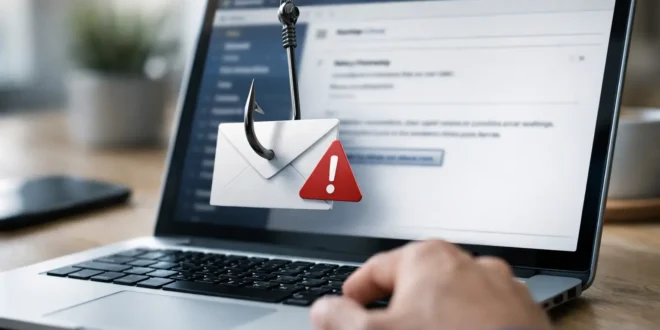

A phishing email attack example can look less like a clumsy scam and more like a routine message from Microsoft 365, a delivery service, or your own finance team. That is the point. Modern phishing works by creating just enough urgency and familiarity to make a busy person click before they stop to verify the request.
For a small business, one successful phishing email can lead to a stolen mailbox, fraudulent invoice payments, exposed customer data, or ransomware access. For an individual, it can mean account takeovers that spread from email to banking, cloud storage, and shopping accounts. The message itself is only the starting point. The damage depends on what happens after the click.
A Phishing Email Attack Example, Explained
Imagine an employee receives this email shortly before the workday begins:
> From: Microsoft 365 Security > Subject: Action required: Your mailbox will be suspended today > > We detected unusual sign-in activity on your account. To avoid service interruption, verify your credentials immediately. > > Verify Account
At first glance, the email uses a recognizable brand, a security-themed reason to act, and a credible consequence. Many recipients will focus on the words “mailbox will be suspended” rather than inspecting the sender address or the destination of the button.
The fake website linked by “Verify Account” may closely copy the Microsoft sign-in page. Once the recipient enters an email address and password, the attacker has working credentials. More advanced phishing kits also ask for the one-time multifactor authentication code. That lets the attacker sign in during the same session, bypassing basic MFA protections.
This is not just a password theft problem. If the account belongs to an administrator, finance employee, or executive, the attacker may read email, create forwarding rules, reset passwords for other services, or impersonate the victim in internal conversations.
The Red Flags Hidden in the Message
No single clue proves an email is malicious. Legitimate companies send automated warnings, use third-party email platforms, and occasionally make formatting mistakes. The safer approach is to assess several signals together.
In the example above, the sender domain is `micros0ft-login.com`, using a zero instead of the letter “o.” On a phone, that difference can be easy to miss. The display name says Microsoft 365, but the actual domain does not belong to Microsoft.
The wording also creates artificial urgency. “Suspended today” is designed to shorten the recipient’s decision time. Attackers know that people who feel rushed are less likely to inspect a message carefully or follow normal support procedures.
A third clue is the generic greeting and vague description of the problem. A real security notification may identify the account, device, location, or sign-in time. Phishing messages often stay broad because the attacker does not know those details.
Finally, the button hides its true destination. Hovering over it on a desktop computer may reveal a misspelled domain, a shortened address, or an unrelated website. On mobile, where hovering is not practical, the safer move is to open a new browser window or trusted app and visit the service directly rather than using the email link.
Why Smart People Still Fall for It
Phishing is not mainly a test of intelligence. It is a test of attention under pressure. A network administrator handling an outage, a business owner approving invoices between meetings, or a student trying to recover access before an exam can all make a reasonable but costly mistake.
Attackers also improve their messages with publicly available information. A criminal who knows a company uses Microsoft 365, QuickBooks, DocuSign, or a specific bank can send a message that fits the target’s daily workflow. AI-generated writing has removed many of the spelling and grammar errors people once relied on to identify scams.
The most dangerous versions are often business email compromise attacks. Instead of sending thousands of generic emails, the attacker gains access to a real mailbox and studies conversations. They then reply to an existing vendor thread with altered banking information or request an urgent wire transfer. Because the message comes from a legitimate account and follows a real conversation, conventional spam filters may not stop it.
What to Do Before You Click
When an email asks you to sign in, pay, open an attachment, change account details, or share a verification code, pause long enough to verify it through another channel. That does not mean replying to the suspicious email or calling the phone number inside it.
For account alerts, open the provider’s official app or type the known website address into your browser. For a payment or vendor request, call a trusted contact using a number already stored in your company directory, contract, or vendor record. A two-minute verification step can prevent a five-figure loss.
Attachments need the same skepticism. An invoice arriving as a password-protected ZIP file, an unexpected HTML file, or an Excel document that asks you to enable macros deserves extra scrutiny. Attackers use these files to hide credential-harvesting pages or deliver malware. If the document was expected, confirm it with the sender through a separate, verified method before opening it.
If You Clicked the Link or Entered a Password
Speed matters, but panic wastes time. If you entered credentials into a suspicious page, change the password immediately from a known-clean device and sign out of active sessions where the service allows it. Do not reuse a new password from any other account.
Next, review the account’s recovery email address, phone number, recent sign-ins, mailbox forwarding rules, and delegated access settings. Mailbox rules are a favorite persistence method because they can silently send invoices, password resets, and customer replies to the attacker.
If the affected account is connected to work systems, contact IT or your managed service provider immediately. They may need to revoke sessions, reset credentials, check identity logs, search for similar emails, and contain access across cloud apps. Delaying because the mistake feels embarrassing gives an attacker more time to move through the environment.
If you provided payment information or approved a transfer, contact the bank or payment provider at once. Financial institutions may be able to recall, freeze, or flag a transaction, but those options get narrower as time passes.
Controls That Reduce Phishing Risk
Training is necessary, but it cannot carry the whole defense. People will sometimes click a convincing message, especially in high-volume environments. The strongest protection layers user awareness with identity, email, and financial controls.
For most organizations, these four measures make an immediate difference:
- Use phishing-resistant MFA where possible, such as security keys or passkeys. SMS codes and authenticator app codes are better than passwords alone, but they can still be captured by real-time phishing pages.
- Configure email authentication with SPF, DKIM, and DMARC. These standards reduce domain spoofing and give mail systems better signals for rejecting or quarantining suspicious messages.
- Limit administrator privileges and use separate accounts for routine work and privileged tasks. A stolen standard user account is still serious, but it should not automatically provide control of servers, firewalls, or identity systems.
- Require out-of-band verification for bank detail changes, new payees, and large transfers. This control directly targets business email compromise, where a technically legitimate email account may be used for fraud.
There are trade-offs. Strict email filtering can occasionally quarantine a valid vendor message, and hardware security keys require procurement and user onboarding. Those inconveniences are usually manageable compared with recovering from compromised email, fraudulent payments, or ransomware.
Build a Reporting Culture, Not a Blame Culture
Employees should know exactly how to report a suspicious email: use the mail client’s reporting button, forward it to the security team, or contact the designated IT channel. The process must be simple enough to use during a busy day.
Just as important, reporting should not trigger public embarrassment. When people fear blame, they delete suspicious emails or hide accidental clicks. When they report quickly, security teams can remove similar messages from other inboxes, block malicious domains, and protect the rest of the organization.
A phishing email is trying to steal more than a password. It is trying to borrow your trust, your routine, and your sense of urgency. Treat unexpected requests as a verification task, not an interruption, and that small habit becomes one of the most effective security tools you have.